
Blog
SoftWave Therapy for Physically Demanding Jobs
SoftWave Therapy for Physically Demanding Jobs in Wilmington, DE
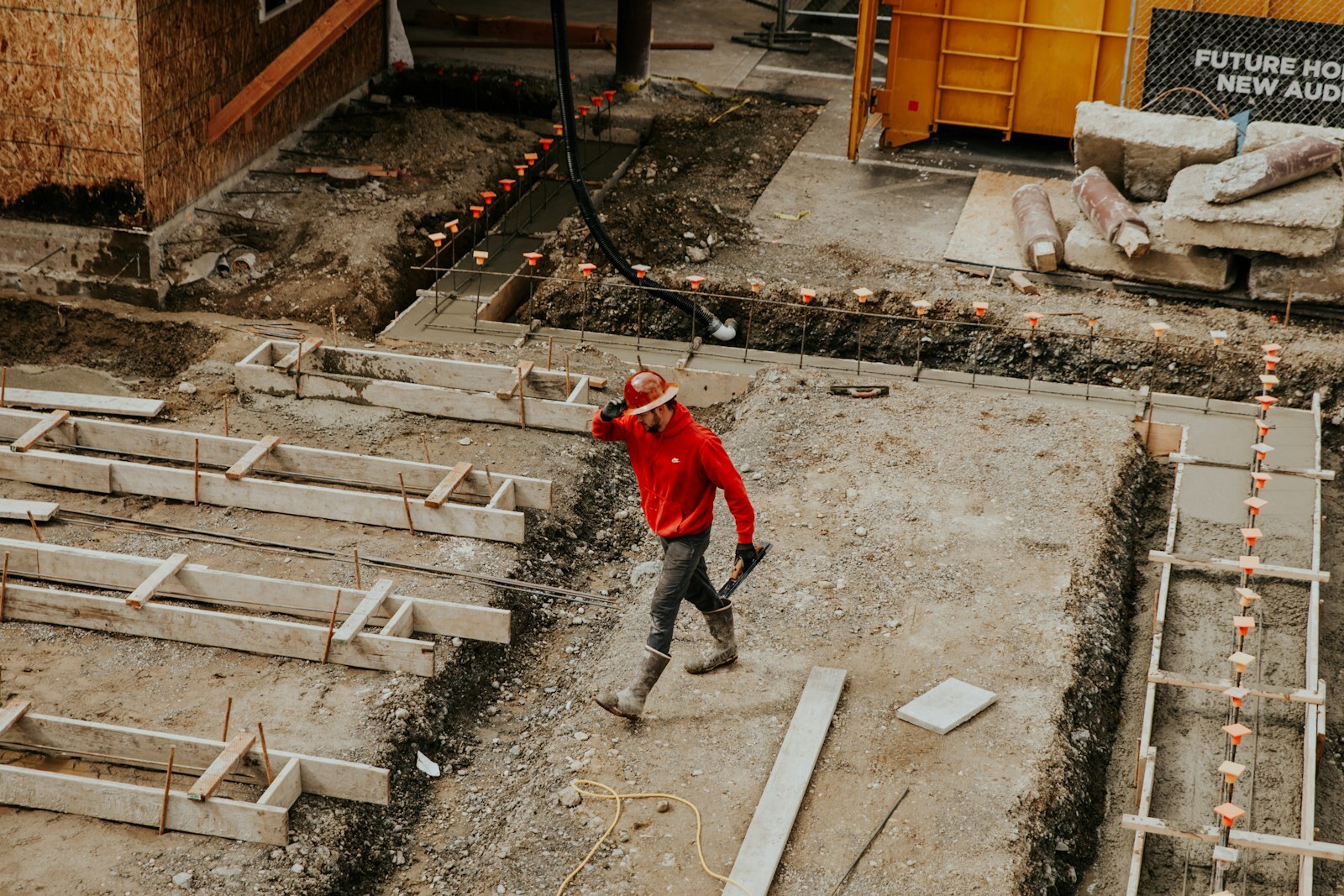
If your workday means lifting, climbing, hauling, bending, or standing on hard floors for hours, your body pays a price that a desk job never asks for. Construction crews, warehouse workers, nurses, delivery drivers, landscapers, and skilled tradespeople all know the feeling: the low back that tightens by mid-shift, the shoulder that aches when you reach overhead, the elbow or wrist that flares up after a heavy week. The pressure to keep working through it is real, because the job does not pause when your body does. At Integrative Physical Health in Wilmington, DE, Dr. Tim Ciolkosz, DC, works with people who cannot simply take weeks off to rest, and SoftWave TRT is one of the tools designed to support tissue repair so you can keep doing what your work demands.
This article looks at why physically demanding jobs wear the body down, how SoftWave is designed to support recovery, and how it fits alongside chiropractic care as part of a practical plan to stay on the job.
Why Hard-Working Bodies Break Down Over Time
Physical labor rarely injures you with a single dramatic moment. More often, the damage is cumulative. Every lift, twist, and repetitive motion places small stresses on muscles, tendons, ligaments, and joints. On their own, those stresses are manageable. Repeated thousands of times over months and years, they can outpace the body's ability to repair itself, and that is when the aches turn into something that lingers.
Different trades tend to accumulate wear in predictable places:
- Construction and trades: low back strain from lifting, shoulder and rotator cuff irritation from overhead work, and elbow or forearm tendonitis from gripping tools all day.
- Warehouse and delivery: repetitive bending and carrying that loads the spine, plus knee and ankle stress from constant walking and climbing in and out of vehicles.
- Nursing and healthcare: back and neck strain from transferring and repositioning patients, and long hours on your feet.
- Landscaping and grounds work: repetitive kneeling, digging, and equipment use that stresses the wrists, knees, and lower back.
The common thread is that these are not fragile people. They are strong, capable workers whose tissues are simply being asked to recover faster than they can. When recovery falls behind, minor muscle and joint pain, tendonitis, and stubborn strains start to interfere with the work itself.
The Cost of Working Through the Pain
Most people in demanding jobs do not stop when something hurts. They adjust. They favor one side, change how they lift, or lean on over-the-counter pain relievers to get through the shift. Those short-term fixes can carry a hidden cost. Compensating with one shoulder can overload the other. Masking pain can let a small problem grow. And the fear of lost income or being seen as unable to keep up keeps many workers from addressing the issue until it forces their hand.
That is exactly the situation where a recovery-focused, non-invasive approach can be valuable. The goal is not to numb the signal so you can push harder into damage. The goal is to support the body's own repair processes so the tissue has a real chance to recover between shifts.
How SoftWave Helps Support Tissue Repair and Recovery
SoftWave TRT uses electrohydraulic, spark-generated acoustic waves delivered through a patented parabolic reflector. This produces broad-focused shockwaves, and SoftWave is the only broad-focused shockwave technology, distinct from radial, electromagnetic, and piezoelectric devices. The waves penetrate deep into tissue and are designed to trigger the body's natural healing cascade rather than simply covering up discomfort.
In plain language, SoftWave is designed to support recovery by helping the body do the following:
- Activate resident stem cells and encourage them to migrate toward areas that need repair.
- Stimulate angiogenesis, the formation of new blood vessels, through signals such as VEGF and eNOS, which supports better circulation to working tissue.
- Encourage cell proliferation and collagen activity through factors like PCNA and BMP, which matter for the tendons and connective tissue that take a beating in physical jobs.
- Modulate inflammation and help regulate toll-like receptors, part of how the body manages its response to repeated stress.
- Support clearance of senescent cells, the worn-out cells that can slow healing.
Because it works with your body's own biology, SoftWave is non-invasive. There are no needles, no drugs, no surgery, and no downtime. Sessions typically run about 10 to 15 minutes, and most people move through a series of visits over roughly 6 to 8 weeks. Notably, the healing response is designed to continue for weeks to months after the final session, which matters when you are trying to build durability into a body that keeps working the whole time.
It is worth being clear about what SoftWave is cleared to do. FDA-cleared uses include activation of connective tissue, a temporary increase in blood flow, and temporary relief of minor muscle and joint pain. Many patients report feeling better able to keep up with their work, but results vary from person to person, and a consultation is what determines whether you are a good candidate.
If you are in the Wilmington area and your job keeps aggravating the same back, shoulder, or tendon issue, request a SoftWave consultation at Integrative Physical Health to find out whether it fits your situation.
Why SoftWave Fits With Chiropractic Care
For people in demanding jobs, SoftWave rarely works in isolation, and it is not meant to. Integrative Physical Health is an integrative practice, and Dr. Ciolkosz often pairs SoftWave with chiropractic care so the two approaches support each other.
Chiropractic care focuses on how your spine and joints move and align. When your mechanics are off, whether from an old lifting habit or a shift spent compensating around pain, certain tissues take more load than they should. Chiropractic adjustments are designed to help restore healthier movement so the strain is distributed more evenly. SoftWave, meanwhile, works at the tissue level to support the repair of the areas that have already taken the wear. Addressing both the mechanics and the tissue tends to make more sense than chasing one while ignoring the other. The practice also offers spinal decompression and red light therapy, so a plan can be tailored to what your body and your job actually require.
What to Expect as a Working Person
One of the practical advantages for someone with a physical job is that SoftWave asks very little of your schedule. There is no recovery period after a session, so you are not trading one form of downtime for another. Appointments are short. You do not have to stop working to receive care, which is often the deciding factor for people who cannot afford to take time off.
Everyone's body and job are different, so the right plan starts with an evaluation. Dr. Ciolkosz will look at your history, your specific complaints, and the demands of your work before recommending whether SoftWave, chiropractic care, or a combination makes sense for you. Conservative, non-invasive care that supports your body's own healing is often a sensible first step before considering more aggressive options.
Ready to Take the Next Step?
If your job keeps taking a toll on your back, shoulders, or joints and you want a non-invasive way to support recovery without losing time off work, now is a good moment to get evaluated. A short consultation is all it takes to learn whether SoftWave is right for you.
Request your SoftWave Therapy new patient visit online today
Contact Integrative Physical Health
Integrative Physical Health
3105 Limestone Road, Suite 303
Wilmington, DE 19808
Phone: 302-510-6780
Our Main Office Website: https://integrativephysicalhealth.com/
‹ Back
Recent Posts
-
SoftWave Therapy for TMJ and Jaw Pain
June 24, 2026
-

-
SoftWave Therapy for Physically Demanding Jobs
May 12, 2026
-

SoftWave Therapy for Pickleball Players in Wilmington, DE
April 21, 2026
-


 3105 Limestone Road
